
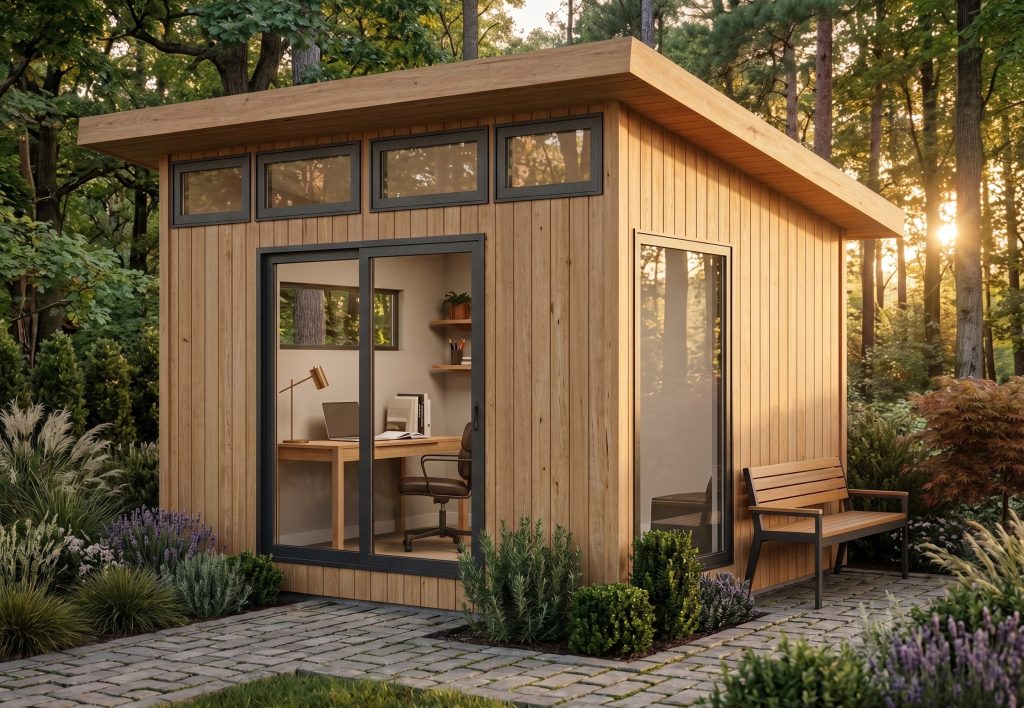
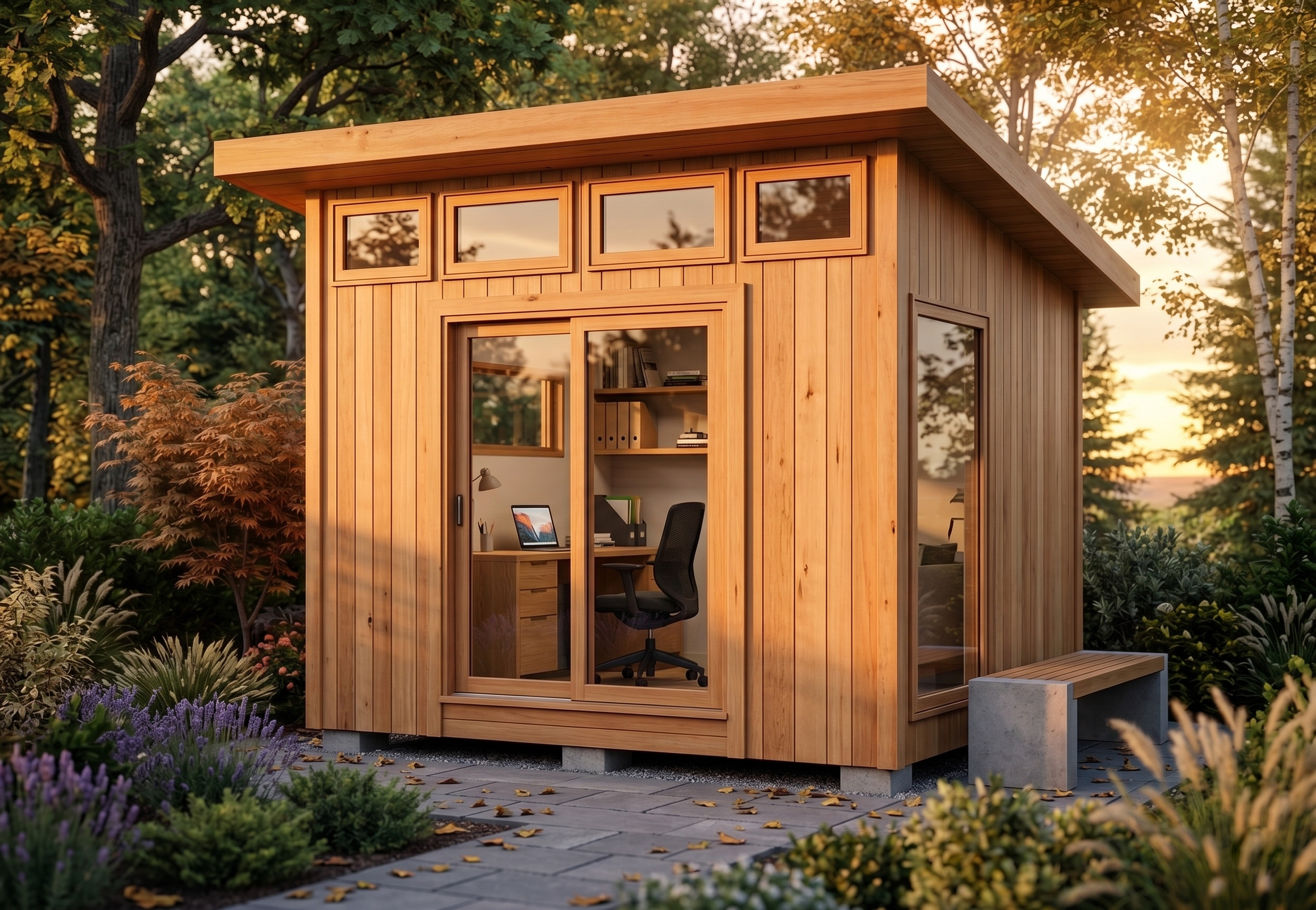
Working from home becomes a whole lot easier when you have a dedicated space that is quiet, functional, and built exactly the way you want it. In this tutorial, I’ll show you how to build a DIY modern office shed 10×12 using simple framing techniques, durable materials, and practical construction methods that work well for both beginners and experienced woodworkers.
This backyard office shed is designed to create a clean, modern workspace without the high cost of hiring contractors. The design features a strong floor system, durable wall framing, and a modern shed style that works well as a home office, studio, workshop, hobby room, or backyard retreat.
A Practical DIY Woodworking Project for Any Skill Level
If you’ve been searching for woodworking project plans for a backyard office or small modern shed, this project is a great option. The build is straightforward, budget-friendly, and designed with standard lumber sizes to make the construction process easier.
Throughout this tutorial, you’ll learn important woodworking and framing techniques including foundation layout, floor framing, wall construction, roof framing, and exterior finishing. The project can also be customized with different siding, windows, doors, or interior finishes to match your style and workspace needs.
Whether you are building your first large DIY woodworking project or already have experience with shed construction, these plans are designed to help you complete the project with confidence.
Download the PDF Plans
To make the build process easier, you can download the complete DIY modern office shed plans with detailed measurements, material lists, cut diagrams, and step-by-step illustrations. Having the printable PDF plans nearby during the build helps save time and keeps every step organized from start to finish.
Start Building the 10×12 Modern Office Shed
Below, you’ll find the full step-by-step tutorial for building the shed foundation, floor frame, walls, and roof system. Follow along carefully, take your time with measurements, and you’ll end up with a strong and durable modern office shed that will last for years.
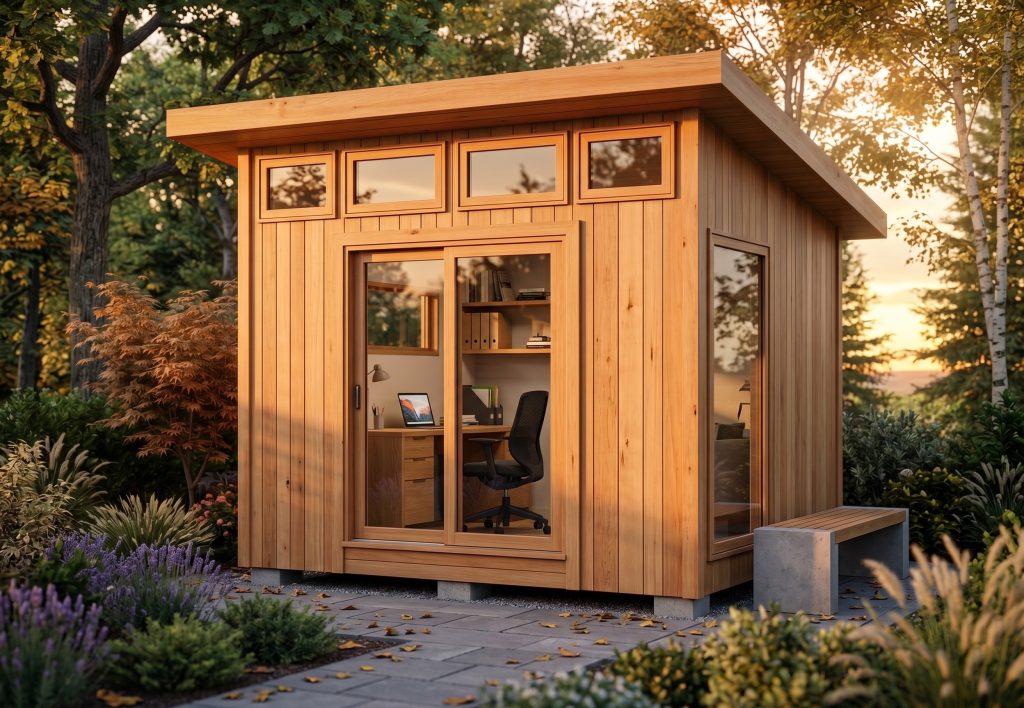
| Time to Complete | Total Cost | Skill Level |
|---|---|---|
| 4 -8 days | $3,500 – $6,000 | Intermediate |
Download Printable Plans in PDF
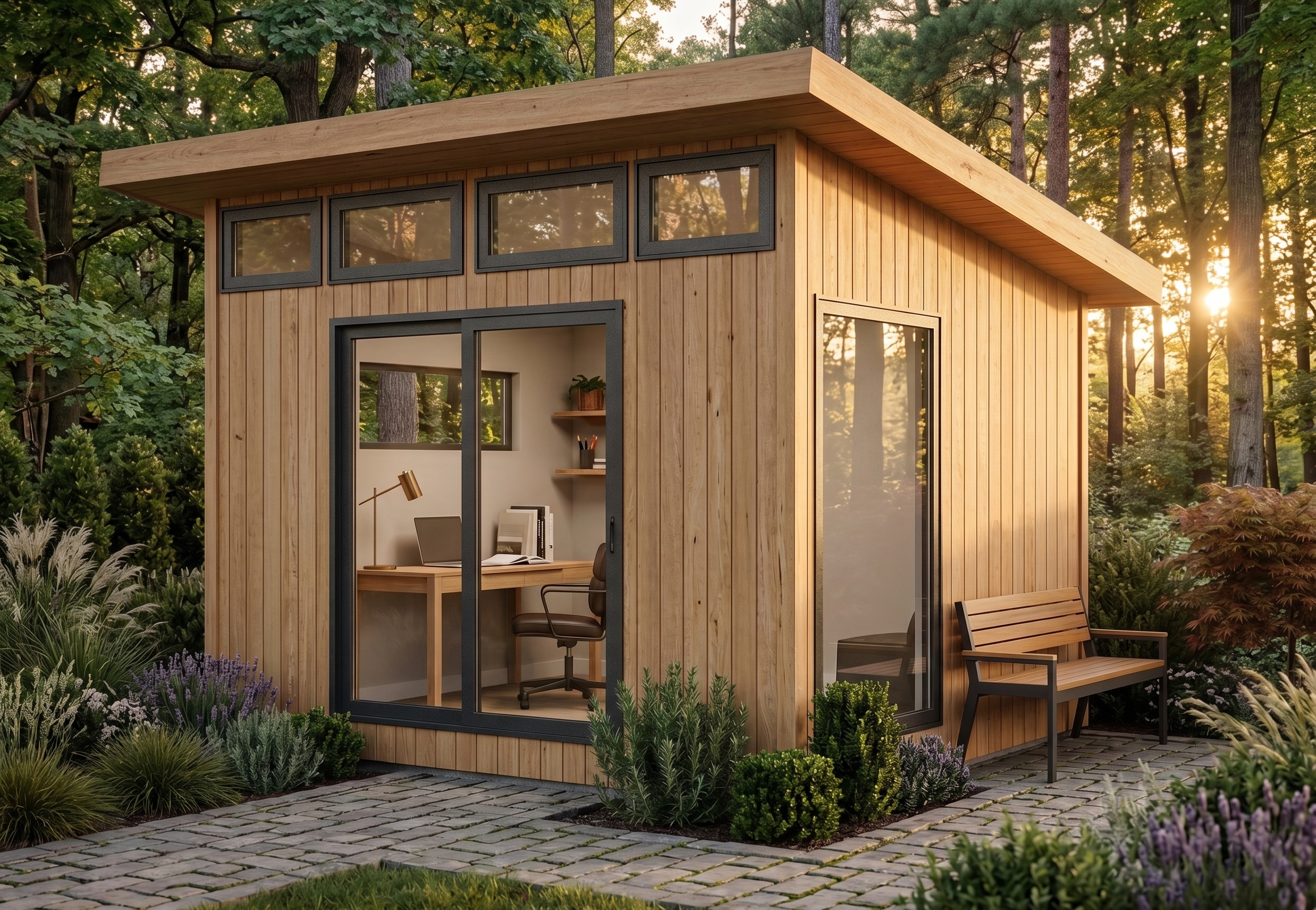
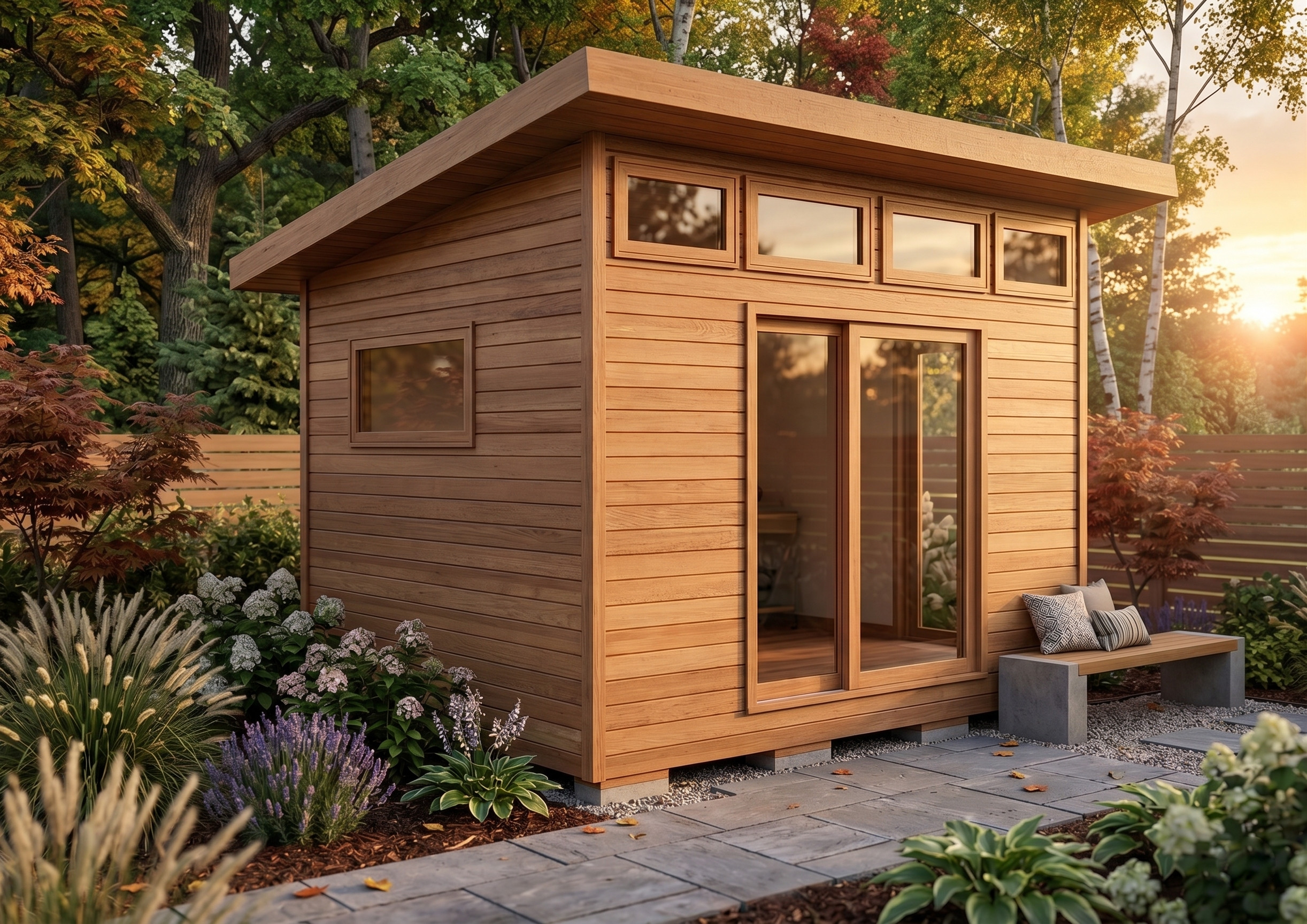
DIY Modern Office Shed Plans -10×12
$26.97
Build a stunning 10×12 modern office shed in your backyard with this instant PDF download. Includes step-by-step woodworking instructions, full cut list with measurements, material list, assembly diagrams, and tools list. Perfect for beginner and intermediate builders. Digital download — no shipping.
This printable woodworking PDF covers every phase of the build: foundation layout, floor framing, wall construction, roof framing, siding, windows, sliding door installation, and interior finishing. Estimated build time: 4–8 days. Estimated cost: $3,500–$6,000. Start building today — download instantly after purchase.
Description
Turn Your Backyard Into a Private Modern Office — Without Hiring a Contractor
If you’ve been dreaming of a quiet, dedicated workspace just steps from your back door, this 10×12 modern office shed is exactly what you need. Designed with clean lines, a contemporary silhouette, and durable construction, this backyard shed works beautifully as a home office, creative studio, woodworking shop, hobby room, or personal retreat.
These woodworking plans take the guesswork out of the entire build. Instead of piecing together scattered tutorials and hoping the measurements line up, you get one complete, organized PDF document that walks you through every step — from leveling the ground to finishing the interior.
Whether you’re searching for how to build a modern office shed, DIY shed woodworking plans with a cut list, or step-by-step backyard shed building instructions, this is the plan that gets it done.
Who These Plans Are For
These plans are written for:
- Intermediate woodworkers who want a manageable, rewarding large-scale project
- DIY homeowners looking to add functional square footage without hiring contractors
- Remote workers and freelancers who need a dedicated, distraction-free home office
- Hobbyists and makers who want a private studio, workshop, or creative space
- Anyone who wants to add lasting value to their property with a backyard structure they built themselves
You don’t need advanced carpentry experience to complete this project. You need solid plans, accurate measurements, and a willingness to follow each step carefully. That’s exactly what this PDF provides.
What’s Included in the PDF Download
This is not a basic overview — it’s a complete, professional-grade woodworking plan designed to support your build from start to finish.
- Step-by-step building instructions covering all 12 phases of construction
- Full cut list with exact measurements for every piece of lumber
- Complete material list with all supplies needed for the build
- Tools required list so you can prepare before you start
- Assembly diagrams and illustrations for foundation, framing, roofing, and more
- Estimated build time — 4 to 8 days depending on experience and help
- Estimated total project cost — $3,500 to $6,000 depending on materials and local pricing
- Printable PDF format — print full sheets or individual sections as needed
- Instant download after purchase — no waiting, no shipping
- Works on desktop, tablet, and mobile devices
Project Details at a Glance
| Detail | Specification |
|---|---|
| Dimensions | 10 feet × 12 feet |
| Style | Modern shed with sloped roof |
| Difficulty Level | Intermediate |
| Estimated Build Time | 4–8 days |
| Estimated Project Cost | $3,500–$6,000 |
| Foundation Type | Solid concrete blocks (no concrete pour required) |
| Primary Framing | Pressure-treated 2×6 floor system; 2×4 wall framing |
| Roof Type | Single-slope (shed roof) with asphalt shingles |
| File Format | Printable PDF — instant download |
What You’ll Build, Step by Step
The PDF plans cover all 12 construction phases in detail:
- Foundation layout — leveling ground and setting solid concrete blocks
- Base supports — installing pressure-treated 2×6 base boards across the foundation
- Floor frame — building the floor structure with 2×6 joists at 16″ on center
- Floor sheathing — laying staggered 3/4″ exterior-grade plywood for maximum strength
- Back wall framing — building and raising the back wall with double top plates
- Front wall framing — framing the front wall with rough openings for the sliding door and windows
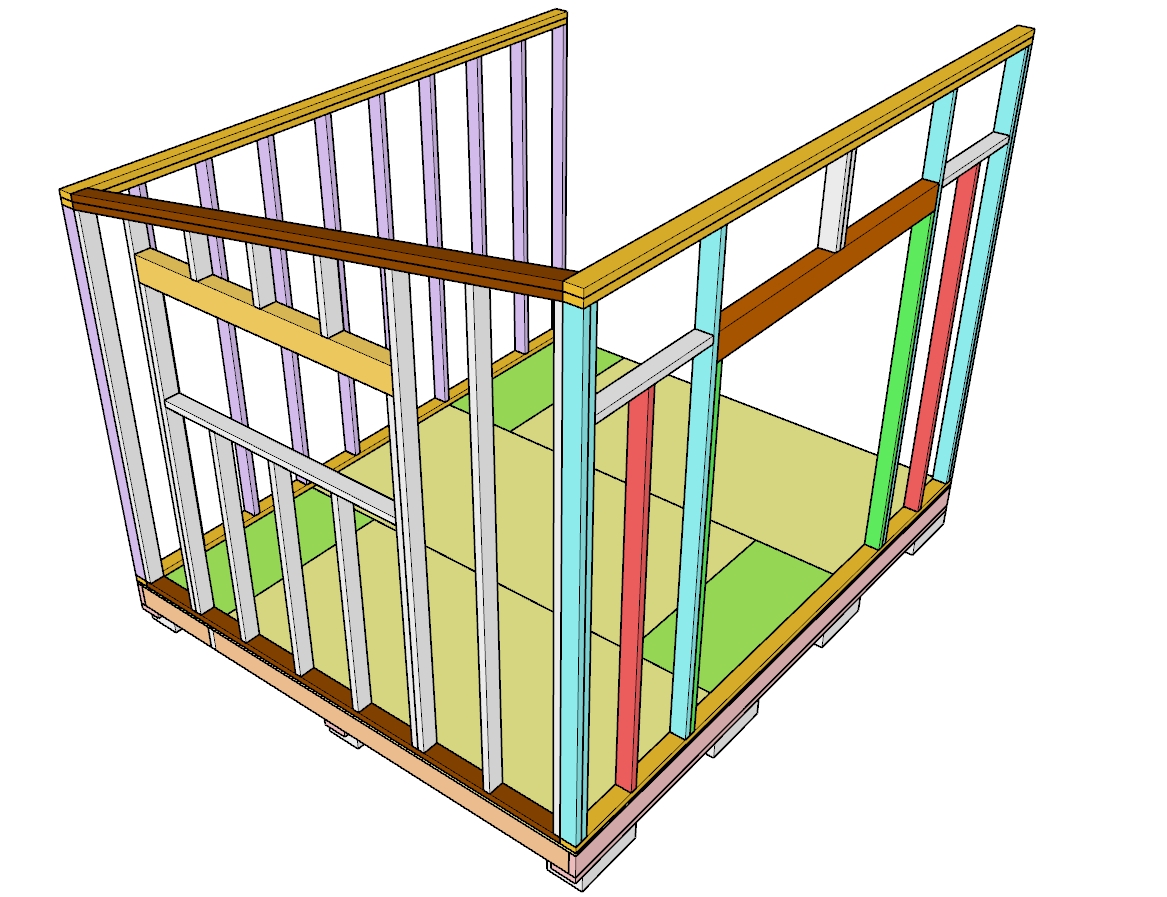
- Side wall framing — cutting angled studs to match the roof slope on both side walls
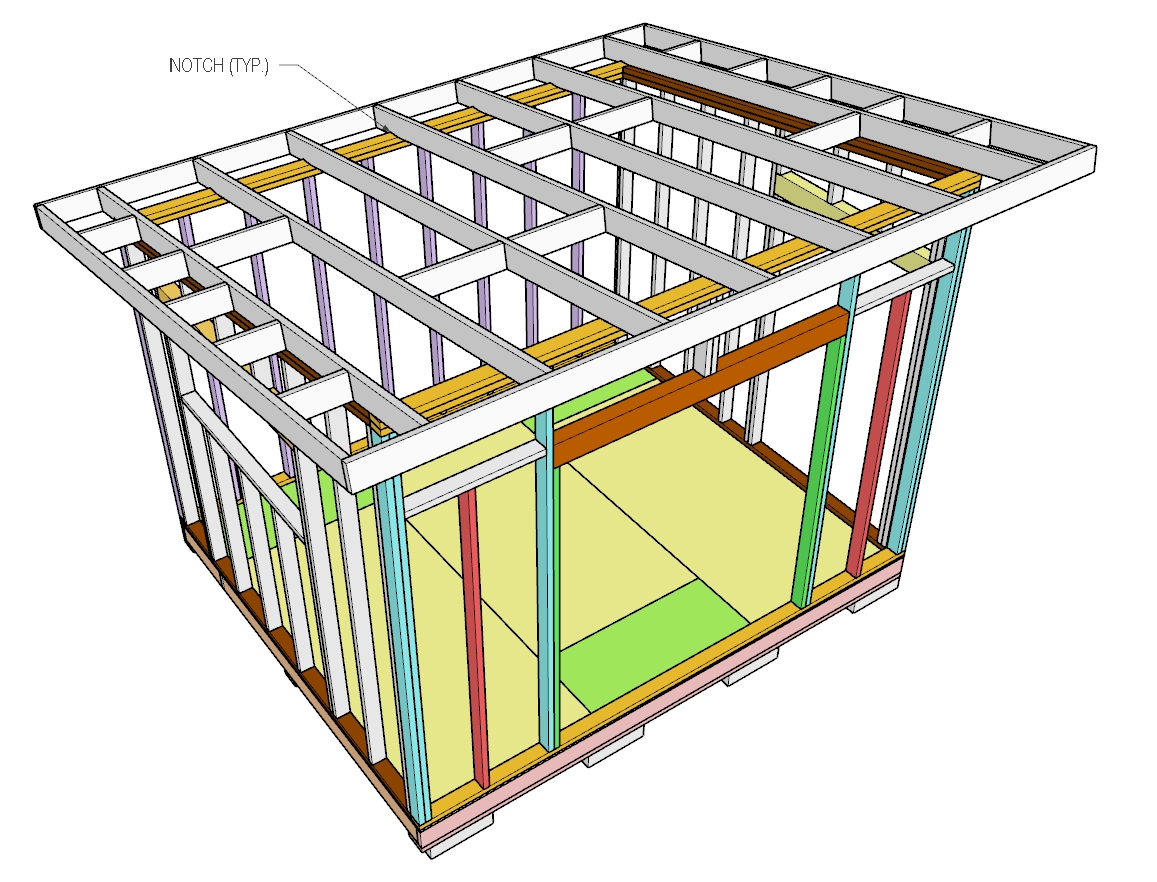
- Roof framing — installing 2×6 roof trusses at 24″ on center with proper overhang
- Roof sheathing and finishing — plywood, fascia boards, roofing paper, and asphalt shingles
- Windows and sliding door — installation with weather stripping and exterior caulk
- House wrap and siding — waterproof barrier and exterior siding panels
- Interior finishing — electrical rough-in, insulation, drywall, and custom use configuration
Why These Plans Save You Time, Money, and Frustration
Building a shed from a collection of YouTube videos and random blog posts is possible — but it’s slow, stressful, and full of costly mistakes. Here’s why a complete, professionally written plan makes the difference:
Accurate measurements from the start. Every cut is listed. No estimating, no guessing.
Everything in one place. Foundation, framing, roofing, siding, windows, and interior finishing — all in a single organized PDF you can print and bring to the job site.
Avoid expensive mistakes. Incorrect rough opening sizes, improperly spaced joists, or a roof slope that doesn’t drain — these are the kinds of errors that cost time and money to fix. The plans account for every detail upfront.
Build at your own pace. The step-by-step format means you can stop and start without losing your place. Pick up where you left off with clear instructions and visual diagrams.
Customize as you go. The plans support different siding types, window sizes, door styles, and interior configurations. The structure is designed to be adapted to your needs.
Digital Download Information
This is a digital product only. No physical materials are shipped.
- Instant download — access your PDF immediately after checkout
- No shipping, no waiting — start planning your build today
- Printable format — print the full plan or individual pages at home or at a print shop
- Device-friendly — open and view on desktop, laptop, tablet, or mobile
- Keep it forever — save to your device or cloud storage for easy reference during the build
Ready to Build Your Modern Backyard Shed?
This 10×12 modern office shed is one of the most rewarding DIY woodworking projects you can take on. It adds real value to your home, gives you a dedicated space for work or creativity, and proves that you built it yourself.
The plans are complete, the measurements are accurate, and the instructions are written clearly for real builders — not just professional contractors.
Download the PDF today and start building your modern backyard office shed.
Other Woodworking Projects
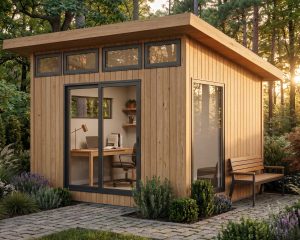
Tools for this project
Material List
- Available with the purchase of PDF plans.
Note: Lumber dimensions are listed as nominal size. See lumber sizes for actual dimensions vs nominal.
Disclosure: Some of the links on this page, as well as links in “tools for this project” and “material list” sections, are affiliate links.
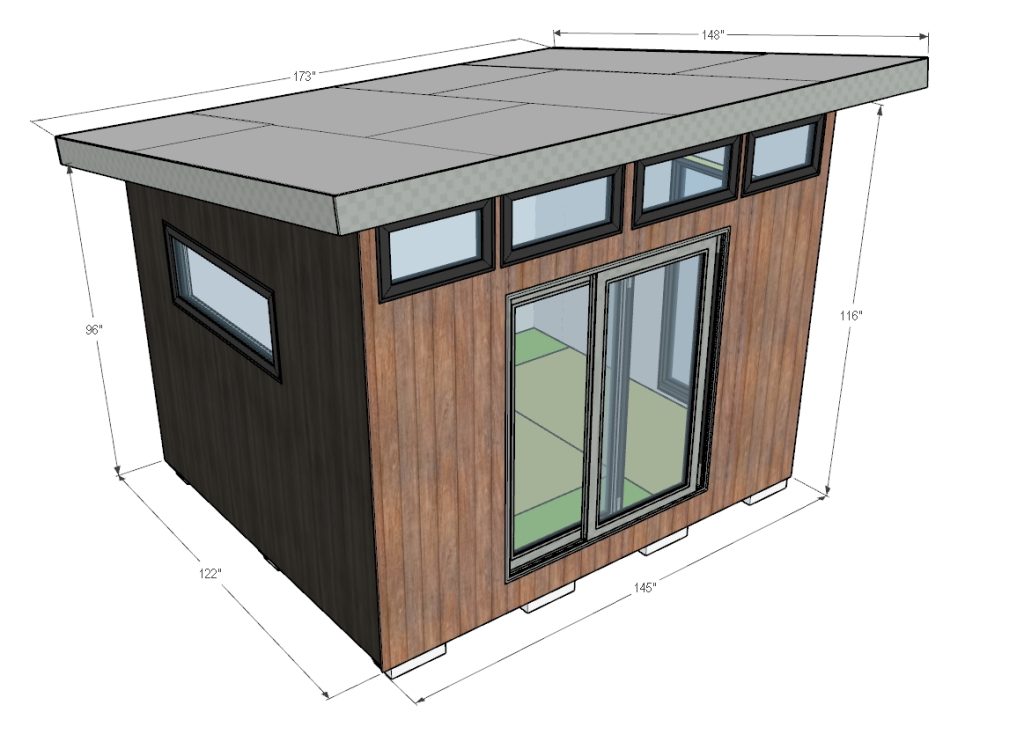
Dimensions
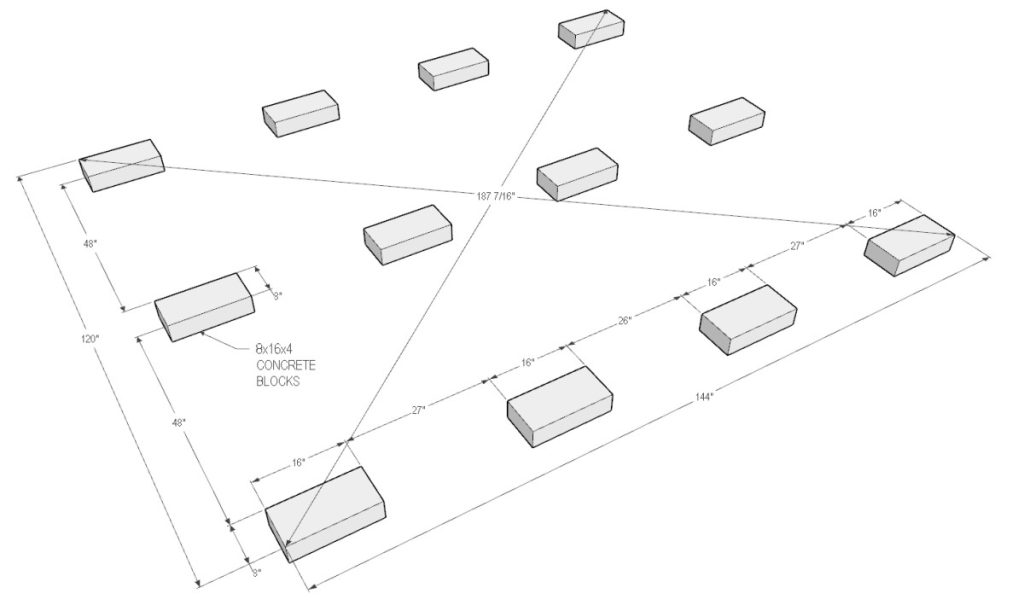
Step 1 – Level the Ground and Set the Concrete Blocks
A strong foundation is essential for keeping your DIY modern office shed level and stable over time. For this project, use 4x8x16 solid concrete blocks, which provide a simple and cost-effective foundation without pouring concrete.
Prepare the Ground
Clear the shed area by removing grass, weeds, rocks, roots, and loose soil. Use a shovel and rake to level the surface as much as possible.
Check for any high or low spots and make sure the ground is flat before placing the blocks.
Place and Square the Concrete Blocks
Position the concrete blocks according to the dimensions shown in the plans. These blocks will support the entire shed, so proper spacing is important.
To square the foundation, measure diagonally from corner to corner in both directions. Both measurements must match exactly. Adjust the blocks as needed until the foundation is square.
Level the Blocks
Use a level, straight board, or string line to make sure all blocks sit at the same height. Adjust the soil under the blocks if needed until every block is fully supported and level.
Taking extra time here will make the rest of the shed build much easier.
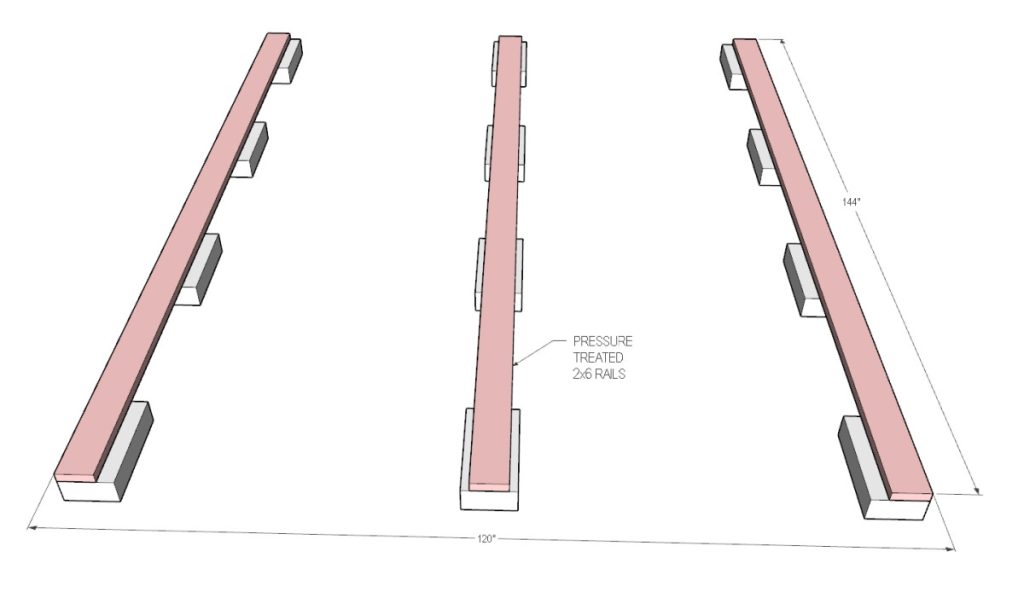
Step 2 – Install the Pressure-Treated 2×6 Base Supports
Use pressure-treated 2×6 lumber for the shed base since it resists moisture, rot, and insect damage.
Place the 12-foot-long 2×6 boards flat across the concrete blocks as shown in the plans. These boards will support the floor framing in the next step.
Because the concrete blocks are wider than the boards, position the two outer boards closer to the outside edges of the blocks and center the middle board evenly.
Make sure all boards sit flat, straight, and fully supported before continuing.
These support boards help distribute the shed’s weight evenly across the foundation and provide solid support for the floor framing.
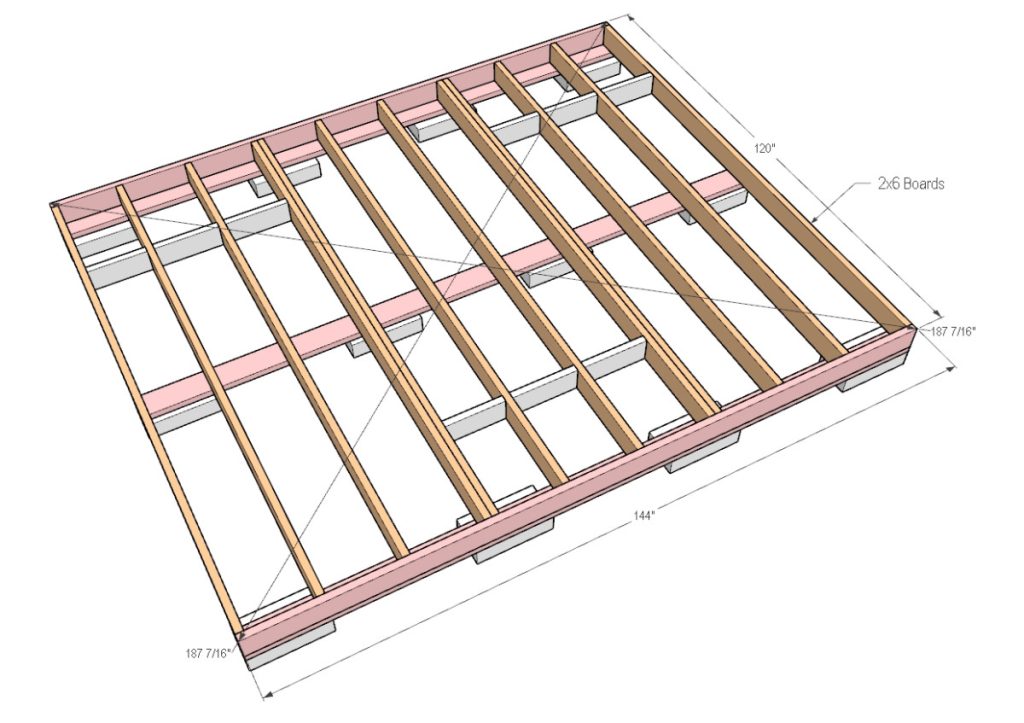
Step 3 – Build the Shed Floor Frame
Build the foundation frame using pressure-treated 2×6 lumber.
Start by placing two 12-foot-long 2×6 boards on top of the base supports from Step 2. Position one board along each outer edge to form the sides of the floor frame.
Next, install the perpendicular 2×6 floor joists between the outer boards, spacing them 16 inches on center. Secure the joists using framing nails or 2 1/2-inch deck screws.
Once assembled, check that the frame is square by measuring diagonally from corner to corner in both directions. Both measurements should match exactly. Adjust the frame if needed until it is perfectly square.
Before moving to the next step, make sure all plywood edges will land on a 2×6 framing member for proper support.
A square and properly supported floor frame creates a strong base for the entire shed.
Step 4 – Cover Foundation Framing with Plywood
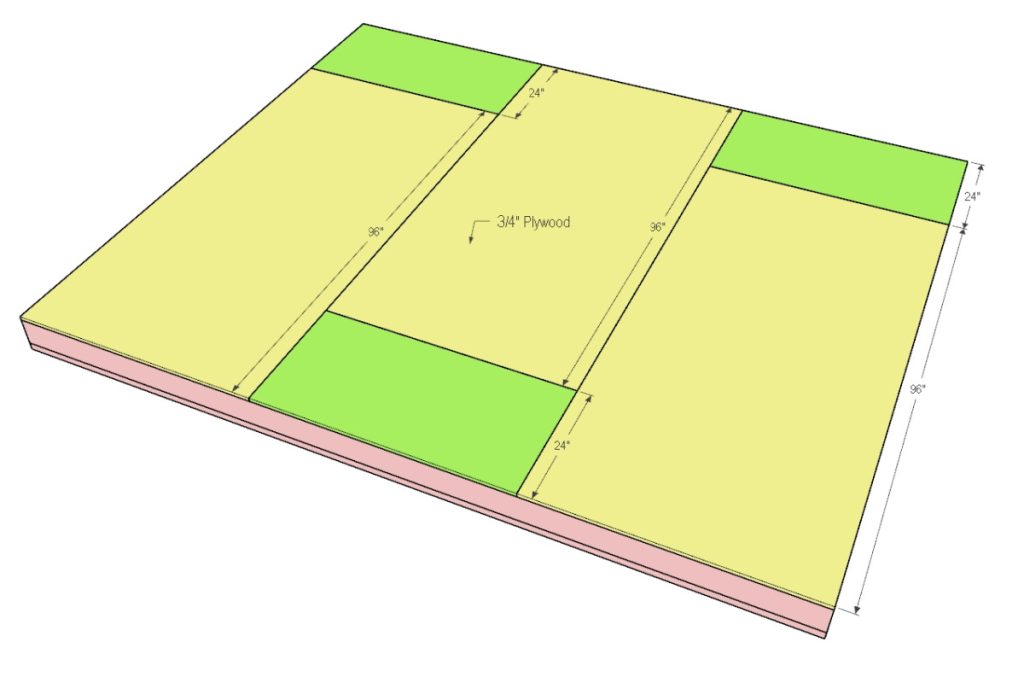
Place 4×8 sheets of 3/4-inch plywood on top of the completed foundation framing. Use exterior-grade plywood for better strength and durability.
Lay the plywood sheets across the frame so that all edges are fully supported by the 2×6 framing underneath. Do not leave any edge hanging without support.
Stagger the plywood sheets instead of lining all seams in one straight line. This means the joints between sheets should be offset. Staggering improves strength and helps distribute weight more evenly across the floor.
Place each sheet carefully before fastening. Make sure the plywood is aligned properly and sits flat on the framing. Adjust as needed before securing.
Once positioned correctly, fasten the plywood to the framing using screws or nails. Make sure every edge is securely attached to the 2×6 frame members.
This staggered layout creates a stronger and more stable floor system. It reduces weak points and helps prevent movement or flexing over time.
Follow the provided diagram to ensure the plywood layout is correct and matches the intended design.
Step 5 – Build the Back Wall
Building the back wall is a straightforward process.
Start by cutting and preparing all your lumber before assembly. This will make the build faster and more accurate.
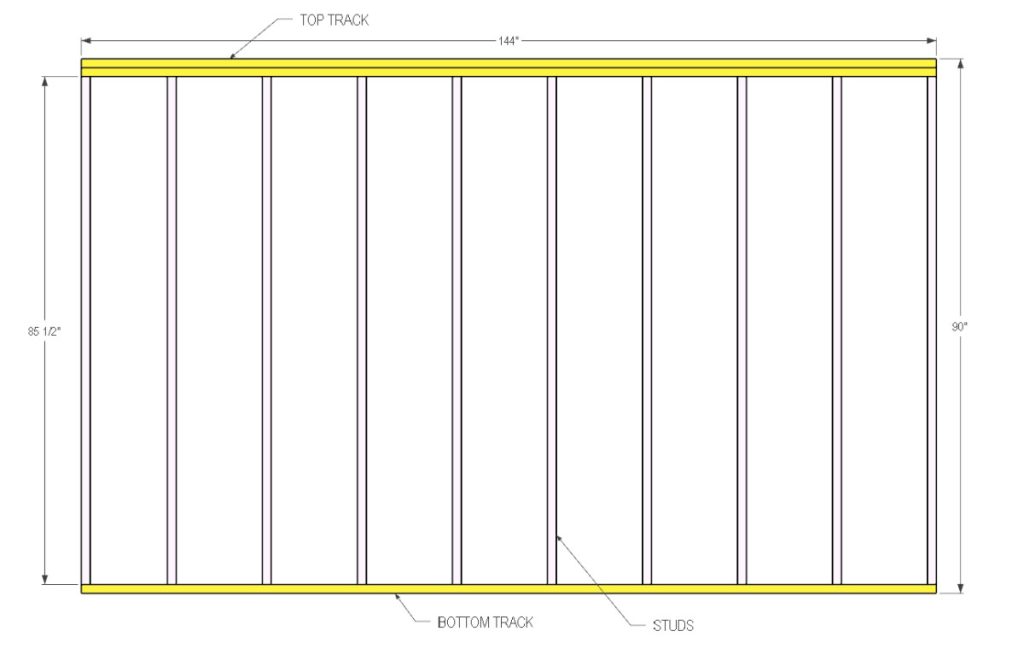
Use one 12-foot-long 2×4 board for the bottom plate (bottom track). Then use two 12-foot-long 2×4 boards for the top plate (top track). The double top plate adds extra strength and stability to the wall.
Next, cut ten wall studs to 85 1/2 inches in length. These studs will form the vertical structure of the wall.
Lay the bottom plate on a flat surface, such as the plywood floor you built in Step 4. Then position the top plates above it to match the wall height.
Space the studs 16 inches apart on center. This spacing provides strong support and is standard for wall framing.
Attach each stud to the bottom plate and top plates using screws or nails. Make sure every connection is tight and square. Check that all studs are straight and evenly spaced before securing everything permanently.
Build the entire wall flat on the floor first. This makes it easier to assemble and keeps everything aligned.
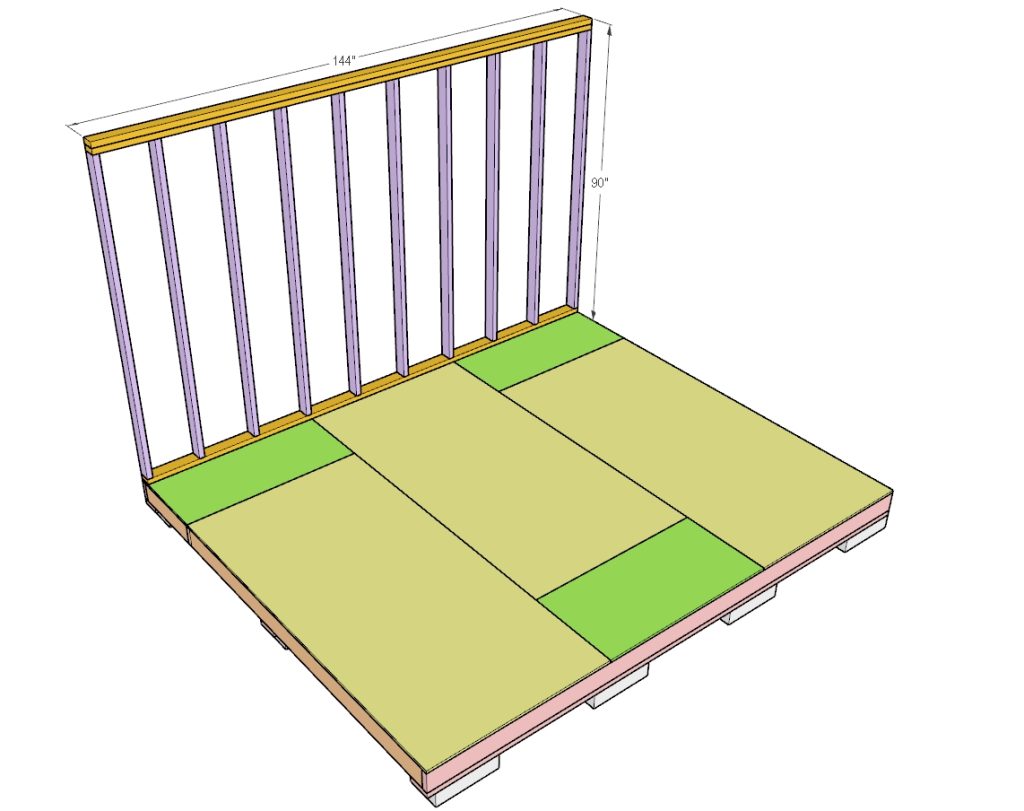
Once the wall frame is complete, carefully lift it into a vertical position. Use at least one or two people for safety, depending on wall weight and size.
After standing the wall up, align it with the foundation framing. Check that it is plumb using a level. Adjust as needed.
Finally, secure the back wall to the floor framing using screws or nails. Make sure the wall is firmly anchored before moving on to the next step.
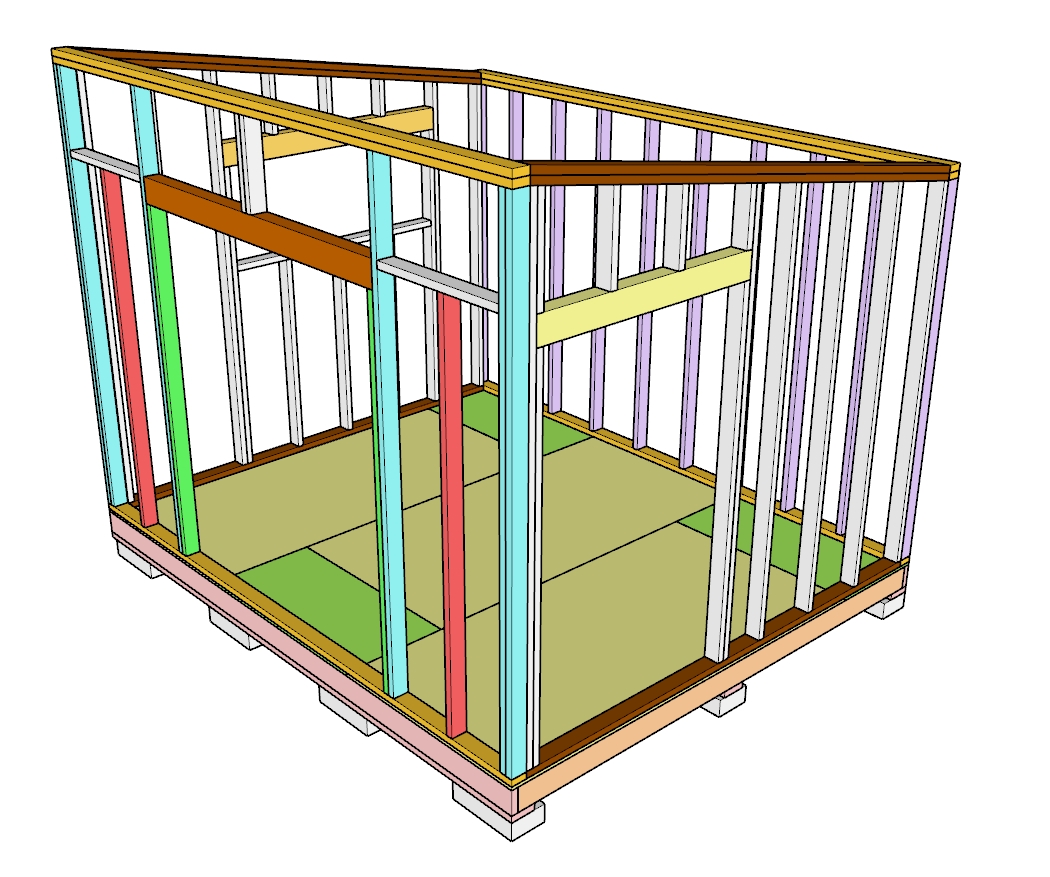
Step 6 – Build the Front Wall
Build the front wall in the same way as the back wall.
Start with one 12-foot 2×4 for the bottom plate (bottom track). Then use two 12-foot 2x4s for the top plate (top track). The double top plate adds strength and helps lock the wall structure together.
Next, cut your wall studs to 103 1/2 inches in length. These taller studs are used for the front wall to match the shed design and door height requirements.
Lay the bottom plate and top plates flat on the floor. Then install the studs between them, spacing each one 16 inches apart on center. Make sure each stud is straight, properly aligned, and securely fastened with screws or nails.
The stud layout in this wall will depend on your door and window locations. You must frame openings based on the exact sizes of your sliding door and windows.
Before installing any studs around openings, double-check the manufacturer’s rough opening requirements for each window and the sliding door. This is very important. Incorrect measurements can cause installation problems later.
Frame each opening carefully so there is enough space for proper installation, shimming, and adjustment.
If you are following the same design shown in the plans, use the provided diagram as a guide for exact placement of doors and windows. This ensures everything lines up correctly when you install the windows and sliding door later.
Once the frame is complete, the front wall is ready to be raised and attached in the next step.
Reviews
There are no reviews yet.